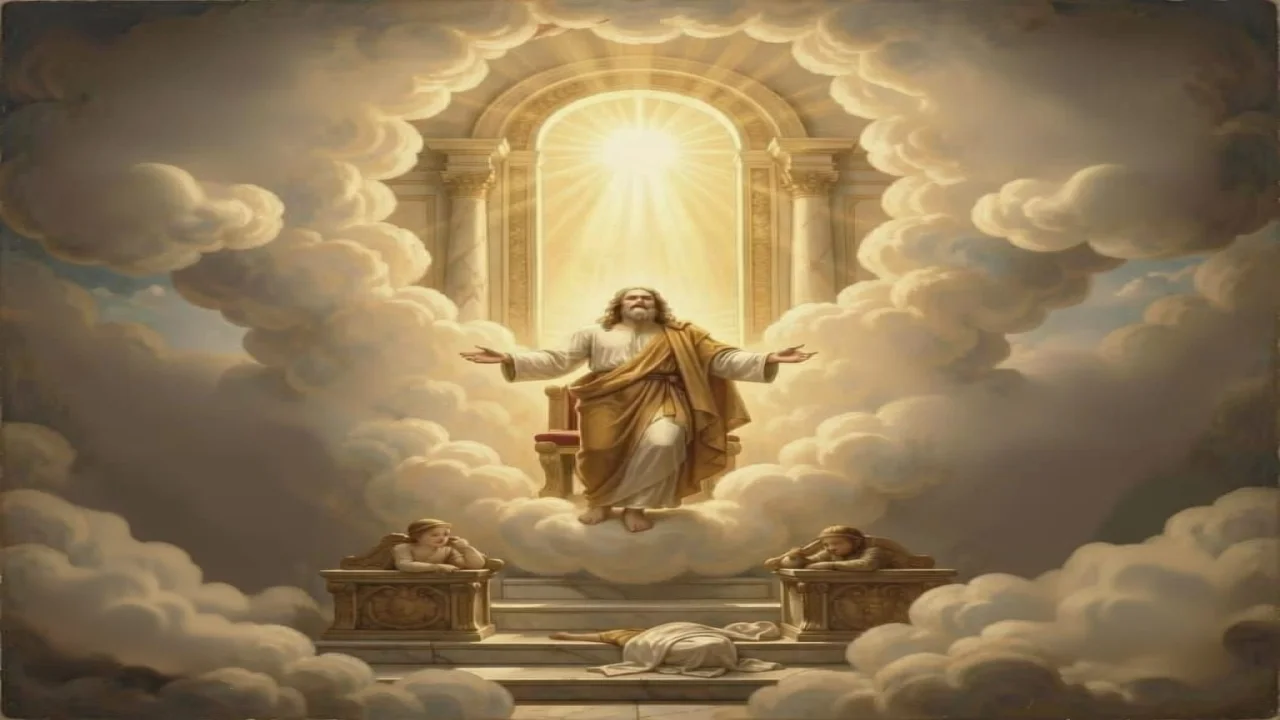
The End of the G7 Great Powers Club – A Planetary Lesson in Elitist Control
What is the G7
The G7 is an informal forum that brings together the leaders of the most developed Western economies: the United States, Canada, the United Kingdom, France, Germany, Italy, Japan, plus the presence of the European Union in some meetings.Source: Testbook
Although this group has no legally binding status, its decisions and statements influence international institutions, global policies, and the world economy.Source: IATP
G7 – A Structure of the Night
Created in 1975, the G7 emerged at a time of energy crisis and financial transformation. The stated goal: cooperation between the great powers for global stability. But in reality, this group has become a symbol of the hegemony of the old era – a structure of economic control, built on the domination of resources and centralized decisions, imposed on the rest of the world.
Structural problems of the G7:
- Radical exclusivism – the G7 is controlled by only 7 states. The remaining 188 states in the world are completely excluded, with no real voice in decisions.
- Lack of cosmic legitimacy – no political structure born on the Night of the Great Year can have spiritual authority in the new solar era.
- Informal government of the material world – through the IMF, World Bank, WTO and OECD, the G7 dictates the rules of global trade and development policies.
Hypocrisy of democracy in the structures of the night
- “We represent democracy” – 188 states are excluded. 7 states control everything.
- “We decide for the global good” – decisions are made in secret circles, without consulting humanity.
- “We promote equality” – the G7 has created massive inequalities that have generated permanent divisions between North and South.
Documented facts and criticism
- Lack of representativeness – G7 excludes major economies such as China, India, Brazil or South Africa.Source: Number Analytics
- Unfulfilled promises – commitments on climate, peace, poverty reduction remain more political statements, without concrete impact.Source: Foreign Policy In Focus
- Putting corporate profits before global interests – The G7 has been criticized for prioritizing corporate profits.Source: The Guardian
- Declining real influence – the G7’s share of nominal world GDP has fallen significantly from around 60% in the 1970s to around 26-30% today.
Influence on global institutions
Although the G7 has no permanent staff or clear legal mandate, it exerts enormous influence on global institutions such as the IMF, the World Bank, the WTO and the OECD.Source: IATP
- Through the IMF – imposes austerity policies and economic restructuring on developing countries.
- Through the World Bank – sets the direction of financing for infrastructure and development.
- Through the WTO and OECD – dictates the rules of global trade.
Consequences and bottlenecks for humanity
- For the peoples of the Global South – G7 decisions are perceived as imposed without real participation, leading to resentment, distrust and fragmentation.
- Privilege of developed economies – the challenges of poor countries (debt reduction, infrastructure investment, equity) remain partially resolved.
- Blockage in the evolution of global consciousness – from the perspective of the Planetary School of Consciousness, the G7 represents a "lesson from Hell" that dominated the material era, but which now blocks evolution.
The karmic lesson of the dark age of the Night of the Great Year
All clubs created without divine authority on the Night of the Great Year are fragmentations of the Whole:
- G7 – instrument of the global dictatorship of the 7
- G8 – extension of global control
- G20 – the extension of global control
- Bilderberg – elitist global control
G7 represents the decision-making deadlock of the old era – a relic of a vertical leadership model, based on fear, control and separation.
Decree of the High Priest
In my capacity as High Priest and Masculine Archetype of this form, on the eve of the Day of the Great Year, I DECREE:
1. Recognition of the end of a cycle
The G7, as a structure born on the Night of the Great Year, no longer has spiritual authority in the new solar era. It remains a lesson of the past – a lesson of how elitist control and exclusivism fragment humanity.
2. Reintegration into the planetary family
G7 member states are called to find their place in the Tribe of Man and in the harmony of the Four Great Tribes of the Earth (East, North, West, South).
3. Protection of the Whole
Any political or economic structure that acts without the explicit and free consent of the affected communities, and without total transparency, is declared illegitimate in the face of the awakened planetary consciousness.
4. Lesson, not punishment
Those who orchestrated or served in these structures are not condemned, but called to understanding. The lessons created in the Night are hard – economic domination, elitist control, fragmentation – but they do not define the soul for eternity.
Year of the Lord 1207 – Planetary Kindergarten
We are in the Year of the Lord 1207, not 2026. There is no legal authority in this planetary kindergarten – because a kindergarten has no supreme court, no police, no written laws. It has only educators and children learning to share toys.
On the Day of the Great Year, the constructions of the Night of the Great Year cannot enter. The G7, as a structure born in the night, carrying in its DNA exclusivity and elitist control, cannot cross the threshold of the morning. It remains in yesterday, where it belongs.
All the states that represent this group – the United States, Canada, the United Kingdom, France, Germany, Italy, Japan – are structures created on the Night of the Great Year, without spiritual authority in the creation of the Day of the Great Year. They have generated conflicts, wars and divisions of the Whole represented by all of us.
This “global elite from Hell”, at the gates of Heaven, represents planetary examples of students of life who are trapped by their own illusions in the lessons of the Night of the Great Year, where they themselves have blocked their evolution.
We are 4 great tribes on this earth – East, North, West, South united in the tribe of man on the day of the great year – and these tribes represent the true identity of the students of this planetary school, not rootless structures like the G7.
Final Message
As the planet steps into the new solar age, all structures created by the students of life dissolve. The Light does not negotiate with the dark, but transcends it through unity and truth.
The cycle of darkness has ended. The age of Light begins – the age in which the ultimate authority is the truth lived, not decreed by some student of life. Humanity is learning that true power comes not from institutions, but from consciousness.
As humanity moves into the new solar system of consciousness, such alliances will naturally dissolve, making way for new forms of global cooperation based on light, balance, and shared responsibility.
The Light does not negotiate. It simply IS. And on the Day of the Great Year, only Truth stands.
Editorial Notes:
This article is a living document currently in development. While automated translation provides accessibility, nuanced concepts may require consultation of the original Romanian/ Dacian version for full philosophical precision.